Insights from Moses Palmer, Business Development Manager, 20/20 Seed Labs Inc.
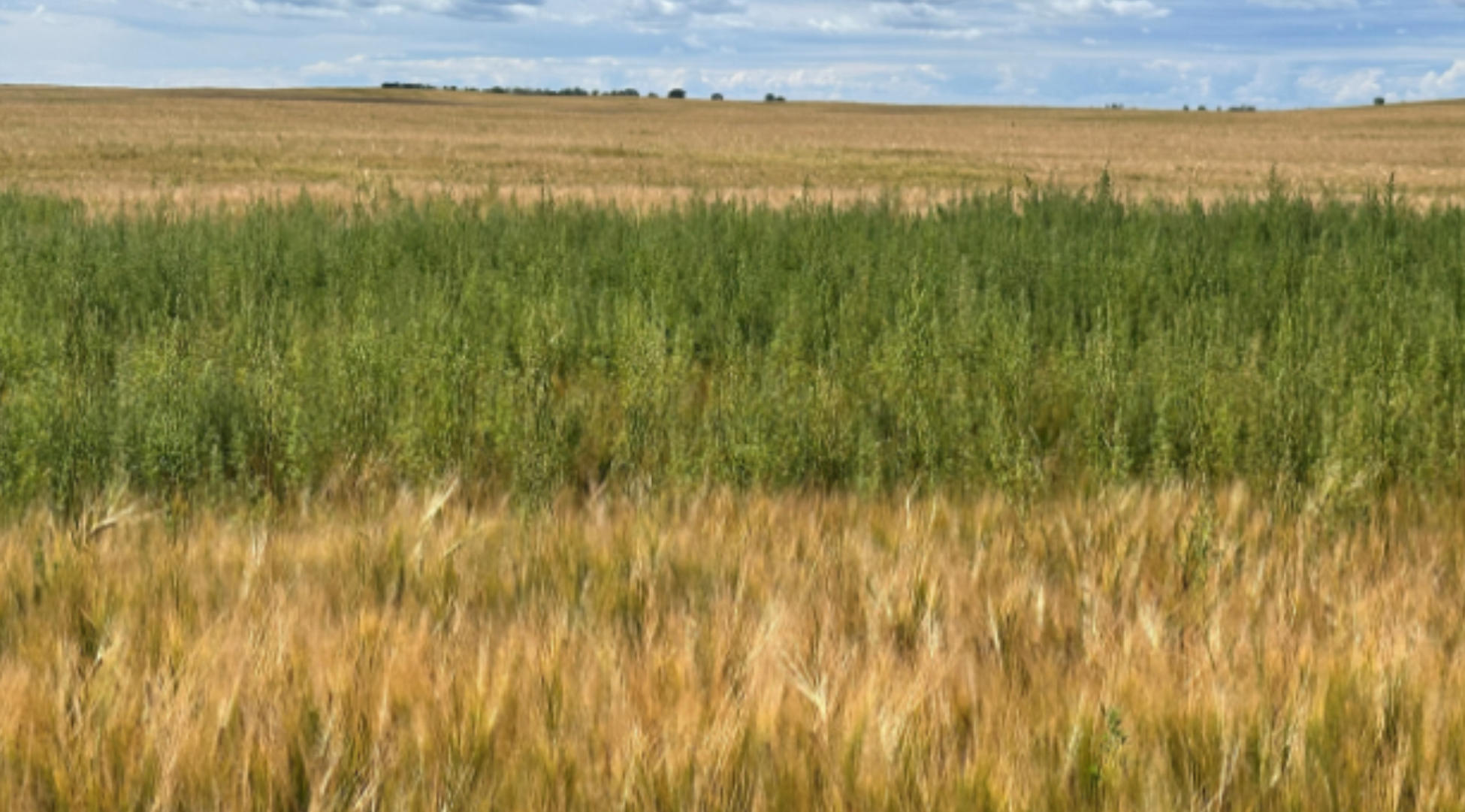
Weed herbicide resistance remains an important consideration for farmers in the prairies. Multiple independent surveys and economic studies show that resistance is widespread, increasing, and economically significant. The most visible proof for farmers is tall wild oat plants and green kochia plants in their cereal fields at harvest.
Herbicide resistance is widespread
Most farmers encounter herbicide resistant weeds every season during their production. Current estimates suggest that over 70% (49 million acres) of prairie crop fields contain at least one herbicide resistant weed species which breaks down to ≈ 72% of fields in Saskatchewan, ≈ 59% of fields in Alberta and ≈ 75% of fields in Manitoba. Canada ranks 3rd globally with herbicide resistance with over 56 confirmed resistant species costing a whopping CAD $658 million per year in losses and control efforts. The problem is still expanding and diversifying with an average of 2 new resistant biotypes (species × herbicide mode combinations) identified every year [1, 2, 3].
Weeds are adapting quickly using multiple mechanisms
Key weeds such as wild oats and kochia are showing high resistance frequencies. Data from recent surveys show that 69% of wild oat populations are herbicide resistant with 77% of fields with Group 1resistance and 30% having multiple resistance to Group 1 & 2. On the other hand, kochia appears to have 100% of populations showing resistance to ALS (Group 2) herbicides. Glyphosate resistance in kochia is currently spreading with about 58-87% of samples showing resistance depending on the province. In Saskatchewan, up to 40% of kochia populations have resistance to multiple groups of herbicides. Rapid adaptation and the adoption of multiple mechanisms of resistance in these key weeds makes it more difficult and costly for farmers to control [3].
The view from the lab
Testing in our lab confirms the results of the Prairie Weed Surveys. Of all wild oat samples tested in the fall of 2024 and 2025 in our greenhouse, 56% of all samples showed resistance to Group 1& 2 modes of action (MOA).
20/20 Seed Labs recently launched a plant tissue test for herbicide resistance in the following species to test weed species in the spring.
- Wild Oat (Groups 1 & 2)
- Kochia (Groups 2, 5, 9 & 14)
- Green Foxtail (Groups 1 & 2)
- Foxtail Barley (Group 1)
- False Cleavers (Group 2)
- Downy Brome (Group 9)
- Waterhemp (Groups 9 & 14)
Testing is in its early stages, but preliminary data indicates that most growers are interested in Group 14 resistance in kochia. So far, all samples have had genes linked to PPO resistance. This trend is one to watch for as most kochia plants are already resistant to Group 2, 4 and 9 herbicides. Widespread Group 14 resistance will further limit the options for farmers to control herbicide resistant kochia plants.
How to use data from testing to support your Integrated Weed Management (IWM) Program
Most farmers have a good sense of whether their choice of herbicides have been effective in weed control in the spring when plants start to emerge. However, the visual indications of herbicide failure alone are not enough to determine if resistance is present in the field. Poor control can be the result of several factors including application errors, environmental conditions, and weed growth staging at the time of application.
Herbicide resistance testing is a foundational step in IWM, removing the guess work and providing accurate and early detection of herbicide resistance. Information gathered from testing allows farmers and agronomists to adopt a proactive approach to weed management instead of reacting after the fact.
A comprehensive approach to testing combines the whole plant bioassay (phenotypic) and the plant tissue molecular (genetic) testing methods. Together, these 2 tests provide a more detailed image of the nature of resistance present. The whole plant bioassay is considered the gold standard and is used to confirm resistance by measuring the weed’s response to select herbicides under controlled environments in the greenhouse which is important for detecting both target site and non-target site mutations. This test can reveal resistance to several herbicide groups in a single population and reflects actual control outcomes growers would normally observe in their fields. A drawback of this test is that it requires several weeks to grow plants and evaluate responses, however the test is useful to understanding the full resistance profile of a weed population.
In contrast, the genetic test identifies specific DNA mutations associated with target site resistance. The test is usually quick and sensitive enough to detect mutations before they become a problem in the field. Genetic resistance testing also detects specific mutations that provide clear insights into exact MOA failures. Unfortunately, the genetic test only identifies known mutations and is unable to detect non-target sites or unknow mutations. Another important consideration is that the presence of the mutation does not always equate to full field level resistance. Genetic mutation expressions (phenotype) is a result of complex interactions between the genetics and environment of the weed species. As previously discussed, the environment plays a major role in the efficacy of spray operations and the expression of genetic mutations. Genetic testing is a great tool to use for early spring resistance detection due to its quick turnaround time and allows screening for known resistance such as PPO-resistant kochia.
Herbicide resistance is no longer just a future concern. Most growers are already dealing with the cost of control and worried about the loss of herbicides that were previously effective. By combining accurate diagnostics with sound agronomic advice, growers can make smarter choices, extend the life of herbicide tools and protect the productivity of their operations for the long term.
Contact us at 20/20 Seed Labs with questions about herbicide resistance testing by emailing support@2020seedlabs.ca or learn more about submitting samples at www.2020seedlabs.ca/services/herbicide-resistance-testing
References
1 Melissa Ostash. Herbicide Resistance on the Prairies: An Escalating Threat. February 10, 2026. https://www.adama.com/west-canada/en/tips/herbicide-resistance-prairies-escalating-threat
2 Emily Mckinlay. Herbicide Resistance Across the Prairies. April 23, 2025. https://www.betterfarming.com/magazines/better-farming-prairies/featured-articles/herbicide-resista…
3 Western Grains Research Foundation (WGRF). https://wgrf.ca/projects/the-next-generation-of-prairie-herbicide-resistant-weed-surveys-and-survei… (accessed June 3, 2026)