Written by Sarah Foster, President 20/20 Seed Labs Inc.
Trevor Blois Disease Diagnostics Supervisor 20/20 Seed Labs Inc.
Fall rye, winter wheat and winter triticale must establish quickly and remain resilient through cold, wet conditions. Germination is important, but it does not always tell the whole story—particularly when seedborne fungi can affect emergence, seedling vigour and overwintering potential.
One pathogen of particular concern is Microdochium nivale, formerly classified as Fusarium nivale. This cold-tolerant fungal pathogen can infect cereal seeds and seedlings, contributing to seedling blight, root and crown damage, and pink snow mold in overwintering crops.
Unlike many fungi that develop most aggressively under warmer conditions, M. nivale can remain active in cool, wet environments. This makes it especially relevant to crops planted in the fall.
The pathogen may be carried on seed, survive in infected crop residue or originate from the soil. When infected seed is planted into cool, wet soil, the fungus can interfere with germination and early seedling development. Symptoms may include pre- or post-emergence damping-off, weakened seedlings and brown lesions near the soil line that can progress into root, foot or crown rot.
Microdochium seedling blights are generally most severe in cool, wet soils, whereas seedling blights caused by several Fusarium species tend to be more severe under warmer conditions. This distinction is important when assessing the potential performance of fall-planted seeds.
What Happens Beneath the Snow?
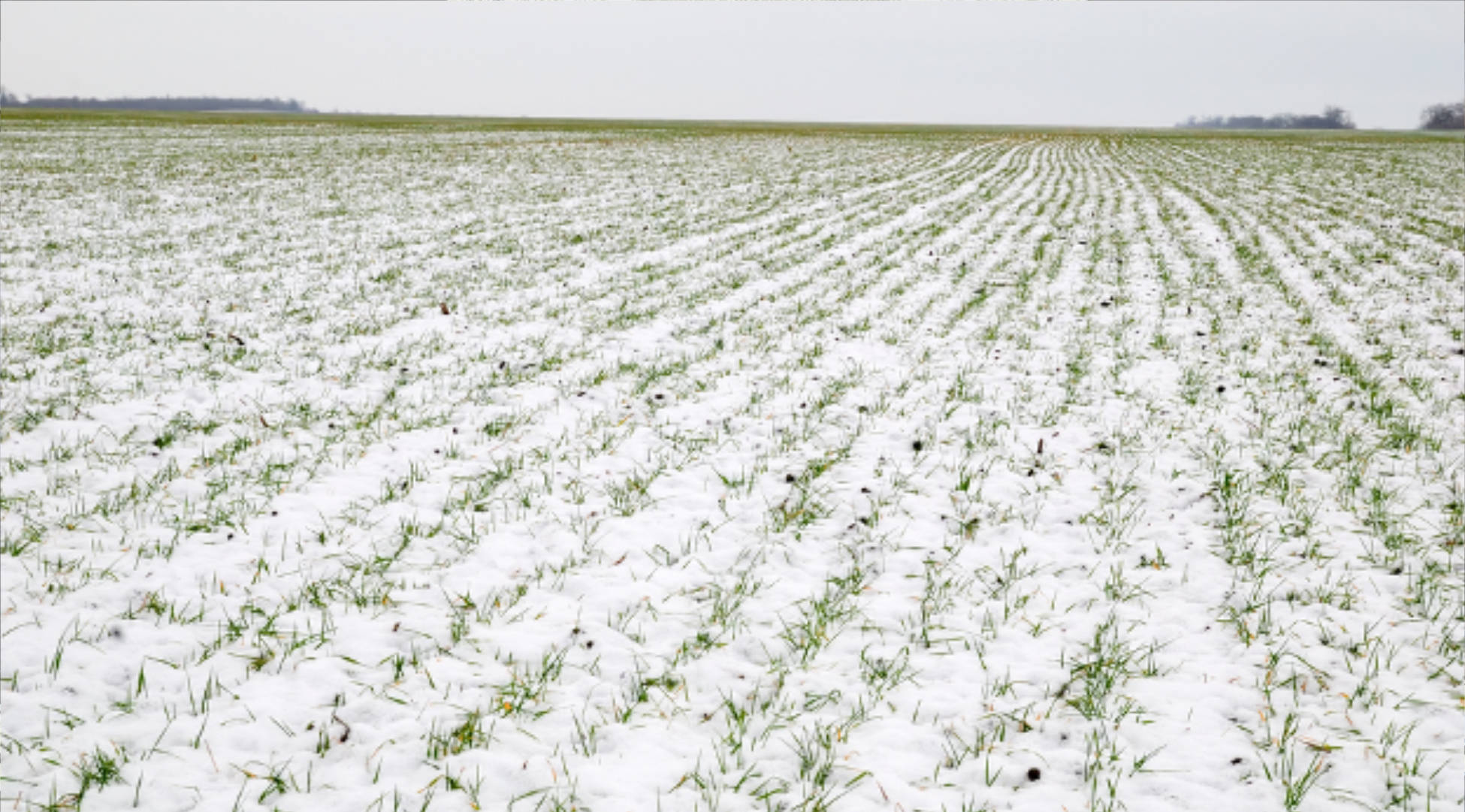
Prolonged snow cover can create a dark, humid, and relatively stable environment near the soil surface. If snow falls before the ground is fully frozen, winter cereal plants may continue to respire while receiving little or no light for photosynthesis. Over time, this can deplete the plants’ carbohydrate reserves and reduce their ability to defend themselves against infection.
Snow cover also holds leaves against the soil and infected crop residue, increasing contact with potential sources of fungal inoculum. Under these conditions, M. nivale can spread through weakened plant tissue.
The resulting disease is commonly known as pink snow mold. Although M. nivale does not require snow cover to cause disease, prolonged cool and wet conditions beneath snow can contribute to serious infections.
Recognizing Pink Snow Mold
Symptoms become most apparent as snow recedes. Producers may see circular or irregular patches of bleached, water-soaked or matted cereal leaves. Under humid conditions, affected plants may be covered with white, web-like fungal growth that can develop a distinctive salmon-pink colour as spores are produced.
The severity of the damage depends on how deeply the pathogen has affected the plant.
When infection is limited primarily to leaf tissue, established plants may recover as temperatures rise and growing conditions improve. More severe infections can damage the crowns and roots, kill plants and leave areas of the field thin or completely bare. If stand loss is extensive, the affected acres may need to be reseeded to a spring crop.
Why Germination Alone May Not Be Enough
A standard germination test measures the percentage of seed capable of producing normal seedlings under favourable laboratory conditions. It remains an essential measure of seed quality but fall-seeded crops are rarely planted into ideal conditions.
Seed may be exposed to cold soil, excess moisture, and pathogen pressure shortly after planting. A lot that performs adequately under standard germination conditions may respond differently when subjected to environmental stress.
At 20/20 Seed Labs, cold stress vigour testing is conducted at 6°C. These cool conditions favour the expression of M. nivale when it is present, allowing analysts to observe how the seed and developing seedlings respond. The fungus can weaken soft seedling tissue, affect root development, and interfere with the seed’s ability to express its full vigour potential.
This information can be particularly useful when making time-sensitive decisions about fall planting, seed treatment, inventory management, or the suitability of a seed lot for its intended conditions.
Evaluating the Value of Seed Treatment
Seed treatment can help reduce early infection and protect seedlings during establishment. Products containing effective fungicidal active ingredients may suppress seedborne Microdochium and allow the underlying vigour of the seed lot to become more apparent.
When treatment response needs to be evaluated, 20/20 Seed Labs can conduct a follow-up cold stress vigour test using treated seed.
Comparing untreated and treated cold stress results can provide additional insight into:
- How strongly fungal infection may be influencing seed performance
- Whether treatment improves seedling development under cold conditions
- The underlying vigour potential of the seed lot
- The seed lot’s suitability for fall planting conditions
Treatment results should always be considered alongside the product label, crop registration, anticipated field conditions, and guidance from a qualified agronomist.
Capturing the True Planting Value
To provide a more complete assessment of fall- and winter-seeded cereal seeds, 20/20 Seed Labs has introduced a Fall/Winter Product Quality Screen for fall rye, winter wheat and winter triticale.
The package includes:
- Germination
- Tetrazolium Chloride Vigour
- Fungal Screen, including Microdochium nivale
Together, these tests provide a broader picture of planting value. Germination measures the seed’s ability to produce normal seedlings. Tetrazolium Chloride Vigour provides a rapid biochemical assessment of viable and vigorous tissue. The fungal screen identifies pathogens that could interfere with establishment or contribute to disease under favourable field conditions.
When M. nivale or reduced performance is identified, a follow-up treated cold stress vigour test can provide another layer of information about the seed lot’s potential under challenging planting conditions.
For fall-seeded cereals, knowing the germination percentage is only the beginning. Understanding vigour, fungal pressure and treatment response can help producers and seed companies make more informed decisions before the seed enters the ground—and before winter conditions put it to the test.
Request access to rates and packages at 20/20 Seed Labs https://2020seedlabs.ca/our-pricing/