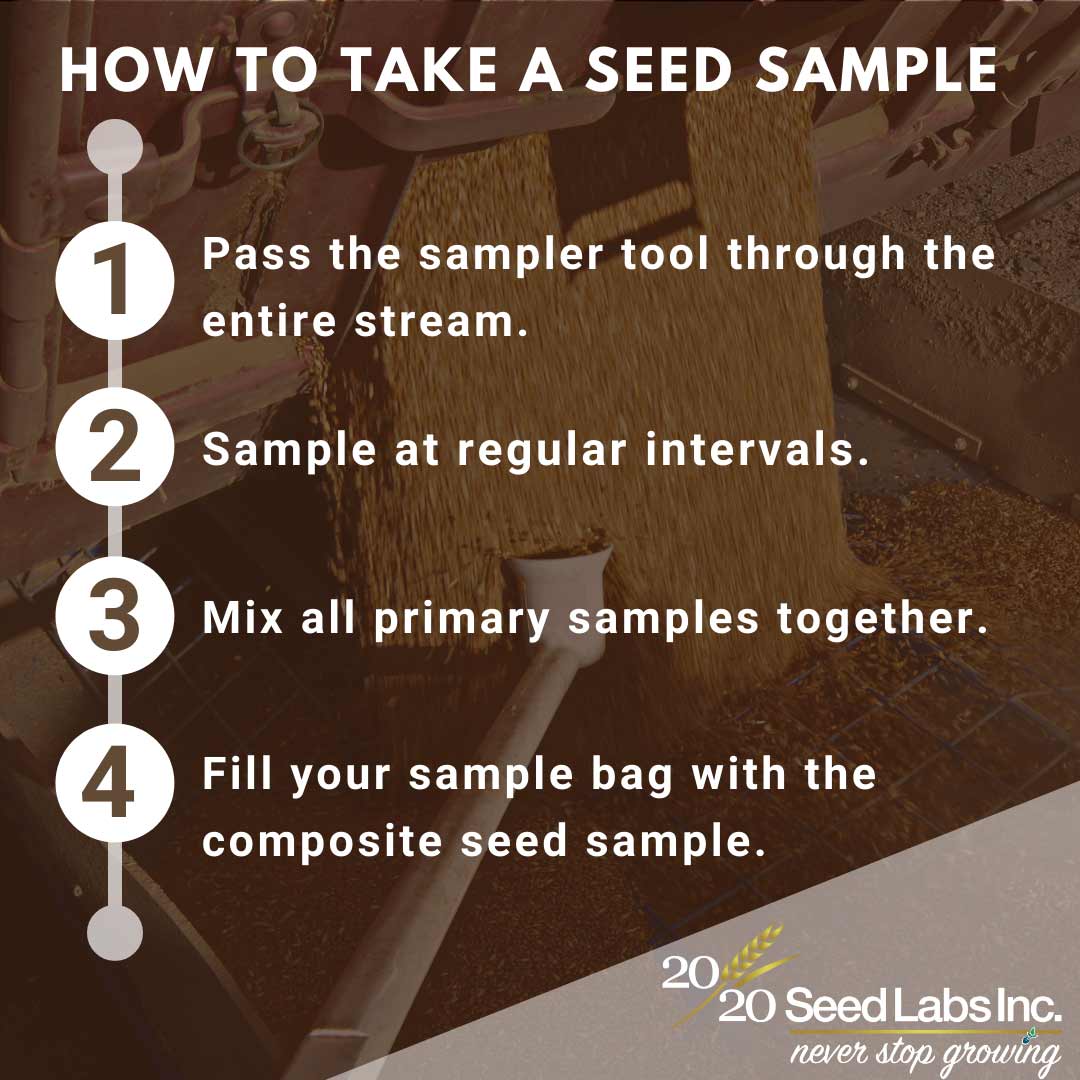
A report of seed analysis can look pretty technical at first glance. Numbers, percentages, abbreviations, pathogen names. But every test result attempts to answer a simple question that growers, seed retailers, and processors are trying to answer: What am I really putting into the ground, and what kind of crop can I realistically expect back? That’s where seed testing earns its value.
Not because it checks a regulatory box, but because every test tells part of the story of how that seed is likely to perform under field conditions.
Anyone can look at a seed lot and think it “looks good.” Clean colour. Uniform size. Maybe it even handled well through the plant. But seed quality problems rarely announce themselves until emergence is uneven; storage issues show up, or disease starts moving through a field weeks later. The real value of testing is catching those issues before the crop has a chance to remind you the hard way.
Take germination testing, for example. Most people know it as the standard test required for seed sales, but it’s really the starting point for understanding seed performance. A germination test doesn’t just give you one percentage — it tells you how many seedlings developed normally, how many were weak or abnormal, and how many seeds were fresh or dead. In other words, it gives context. Two seed lots can both test at 90% germination and still perform very differently in the field. That’s where vigour testing becomes important.
Germination tells you what seed can do under ideal conditions. Vigour helps predict what it will do under stressful ones. Cold soils, inconsistent moisture, delayed emergence, crusting, early-season stress — that’s real farming. Vigour testing measures the seed’s ability to establish healthy, uniform seedlings when conditions aren’t perfect, which is usually where the difference between an average stand and a strong one starts to show.
Moisture testing is another one that’s easy to underestimate until storage becomes a problem. A small moisture difference can mean the difference between seed that stores safely and seed that begins to heat, lose germination, or develop fungal issues in the bin. It’s one of the simplest quality assurance tests available, but also one of the most important for protecting the longevity and integrity of stored seeds.
And while moisture protects storage quality, disease diagnostics protect field potential.
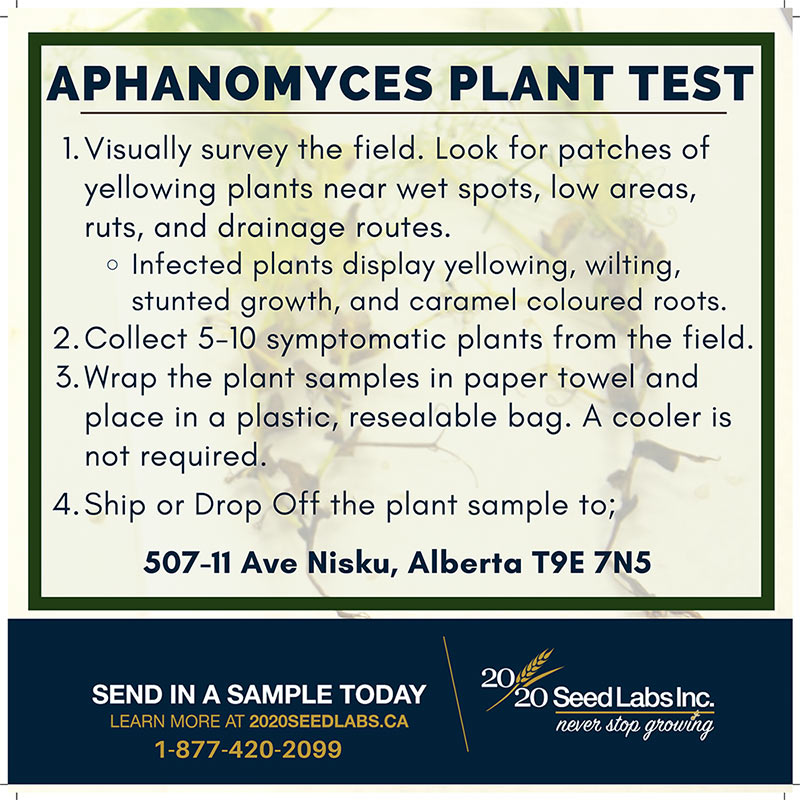
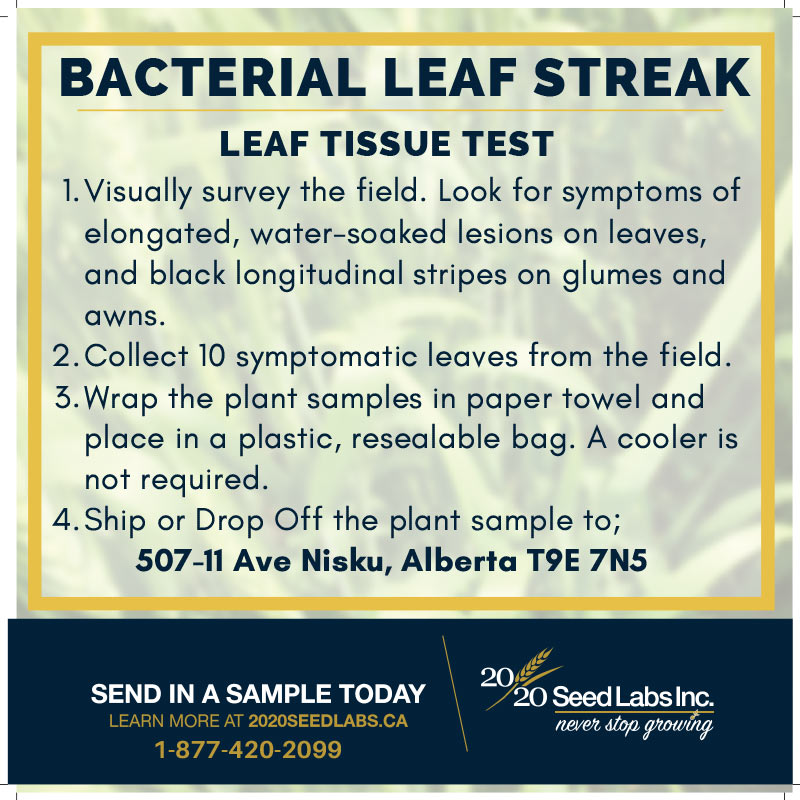
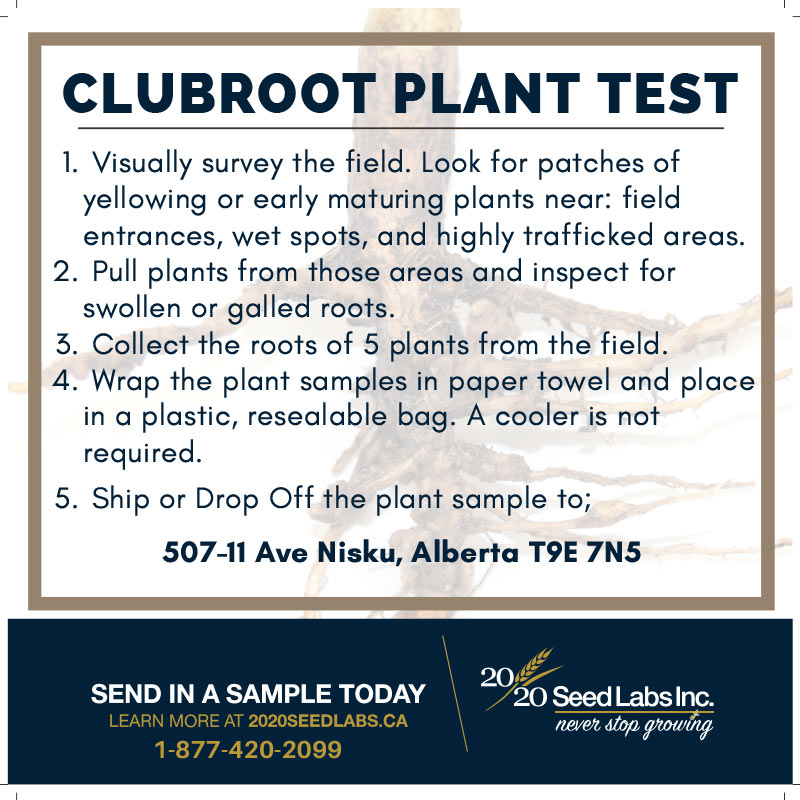
Fungal screens in cereals and complete disease diagnostics in pulses are designed to identify the seed-borne pathogens most likely to impact emergence, plant health, and final yield. In cereals, that includes pathogens like Fusarium graminearum which causes Fusarium Head Blight. In pulses, testing often targets diseases like Ascochyta blight. These infections are not always visible, and sometimes the cleanest-looking seed lots still carry disease pressure capable of causing serious problems once conditions favor development.
The same idea applies to smut testing in barley and wheat. Smut pathogens infect the seed embryo itself, meaning the issue starts long before symptoms become obvious in the field. Identifying those risks early helps growers make treatment and seed management decisions before infection spreads further into production acres.
Some tests are less about disease and more about marketability and crop management.
Protein testing, for instance, plays a major role in determining nutritional and market value in many crops. Falling Number testing helps identify sprout damage by measuring alpha-amylase enzyme activity — critical information when end-use quality matters. In years with challenging harvest conditions, that number can significantly affect grading and marketing opportunities.
Then there are the practical tests growers use every season to fine-tune seeding decisions.
1000 Kernel Weight and Seeds Per Pound both help estimate seed size and density, allowing for more accurate seeding rate calculations. Because seed size varies year to year, relying on assumptions instead of measurements can quickly lead to thinner or overly heavy plant populations. These tests help take the guesswork out of achieving target stands.
Purity and Percent Pure Seed testing complete the picture by identifying what’s present in the sample beyond the intended crop. Weed seeds, other crops, inert matter — it all matters. Not just from a grading standpoint, but from a long-term land management perspective. Introducing problem weeds or contamination into clean fields can create issues that last well beyond a single growing season and cost a lot money in control and yield losses.
The interesting thing about seed testing is that its value often becomes most obvious when something goes wrong. Poor emergence. Uneven stands. Storage spoilage. Disease carryover. Dockage concerns. Rejected loads. Suddenly the cost of testing feels very small compared to the cost of uncertainty.
The best operations don’t use seed testing only when they suspect a problem. They use it as part of routine decision-making because they understand good crops are built long before the planter enters the field.
At the end of the day, seed testing is really about confidence.
Confidence in what’s being sold. Confidence in what is being planted. Confidence that the crop has the best possible start before weather, environment, and field conditions begin adding variables no one can control.
If you’re not sure where to start, simply book a consultation with our team of experts today.
https://2020seedlabs.ca/contact-us/