If there is one thing we see time and time again, it is that some of the biggest disease challenges we deal with are not the ones you can see right away. The organisms that cause disease usually persist in the soil and directly attack the seeds even before the seed sprouts.
Soil-borne diseases do not make a lot of noise early on. They build over time, sometimes for years, and by the time you start noticing uneven growth or patches in the field, you are often already behind. Aphanomyces in pulses and clubroot in canola are good examples of that. By the time symptoms show, your options are a lot tighter than they were earlier in the cycle.
That is where soil testing fits in, but it is important to look at it the right way. When we test soil and return a positive result, all we are really confirming is that the pathogen is present. Soil testing does not tell us exactly how the crop will interact with the pathogen during the season. There are many variables that influence the incidence and severity of disease resulting from this interaction. Moisture, temperature, the crop you choose, how tight your rotation is, and other factors play into whether disease shows up and how severe it becomes.
With Aphanomyces and Clubroot, the mindset must shift a bit. These are not diseases you can clean up in-season like a leaf disease. Once they are established, they stick around. They do not move out, and they do not disappear quickly, and what makes them tricky is how inconsistent they can be. One part of the field might be fine while another struggles, and that can change year to year depending on conditions. You cannot always rely on what you see in front of you.
A soil test on its own does not tell the full story either, and it becomes a lot more useful when you line it up with the rotation history of the field. So does drainage, soil type, and anything you have observed in previous years. If you have had tight rotations or are dealing with heavier soils that hold moisture, knowing what is in the soil ahead of time can really change how you approach things.
The biggest advantage, in our view, is timing. When you have that information before you put a crop in the ground, you still have options. You can adjust what you are seeding, think about variety selection or stretch your rotation. None of that eliminates the disease altogether, but it gives you a way to manage the risk instead of reacting to it after the fact.
Soil testing is not about getting a yes or no answer on what is going to happen. It is about understanding what you are working with so you can make better decisions ahead of time. The goal is fewer surprises and more control over how you manage your fields year-to-year.
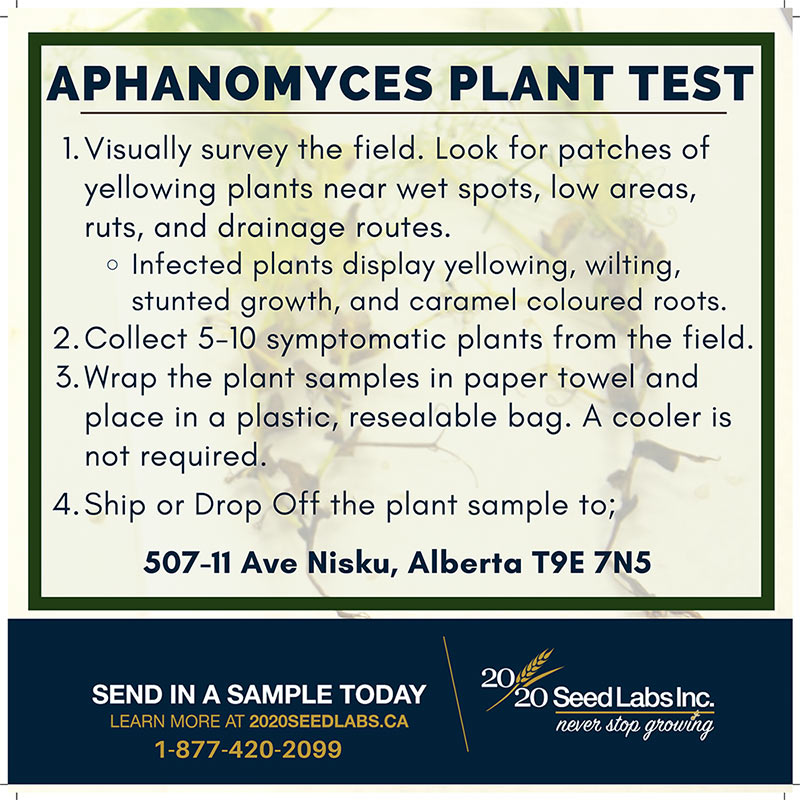
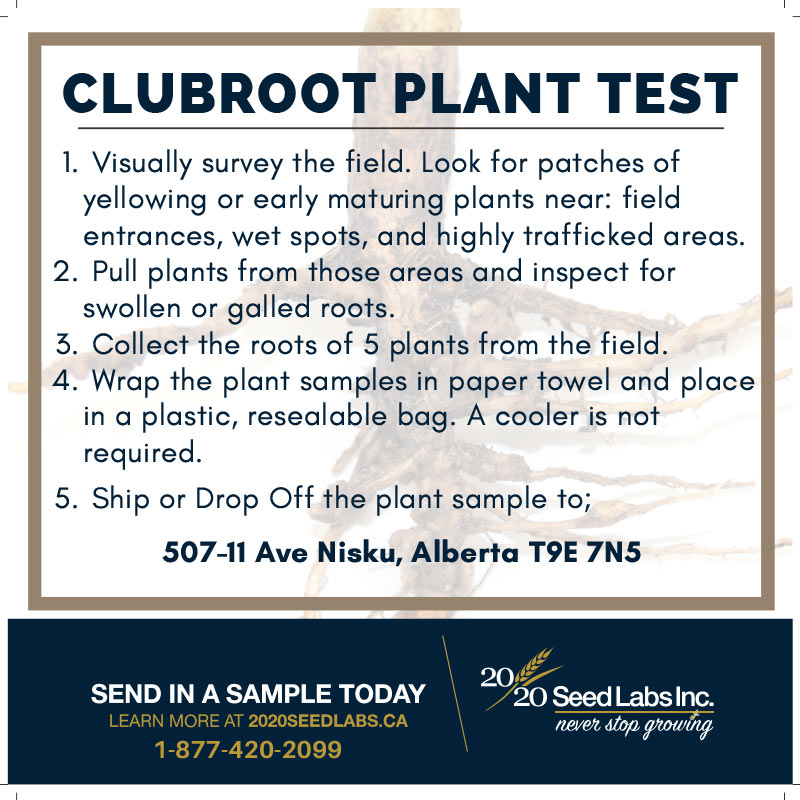
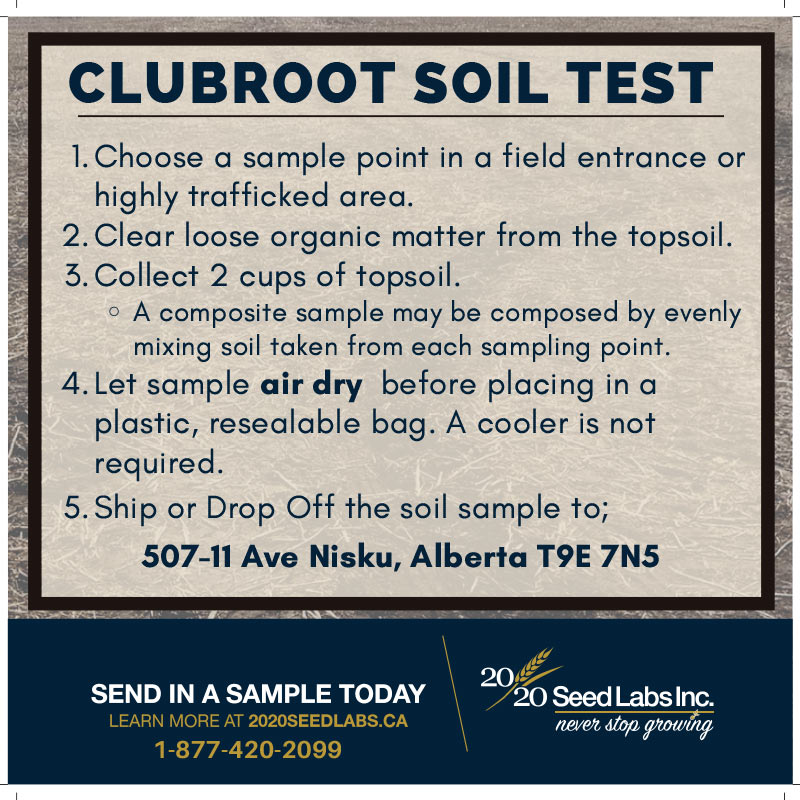
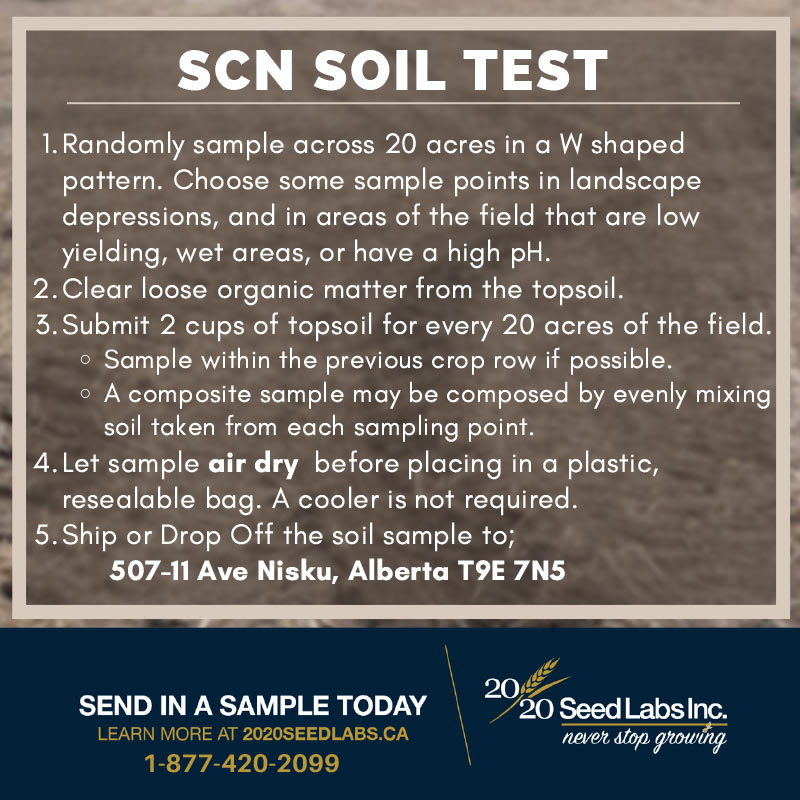
As we move into spring sampling season, we wanted to share a quick reminder on best practices for soil sampling when testing for Aphanomyces or Clubroot.
Proper timing and soil conditions play a key role in ensuring accurate and reliable results.
When to Sample?
- Early Spring is an excellent time for both tests.
- Post-harvest (fall) is also ideal for Clubroot.
Field sampling tips:
- Avoid sampling in frozen or overly saturated soils.
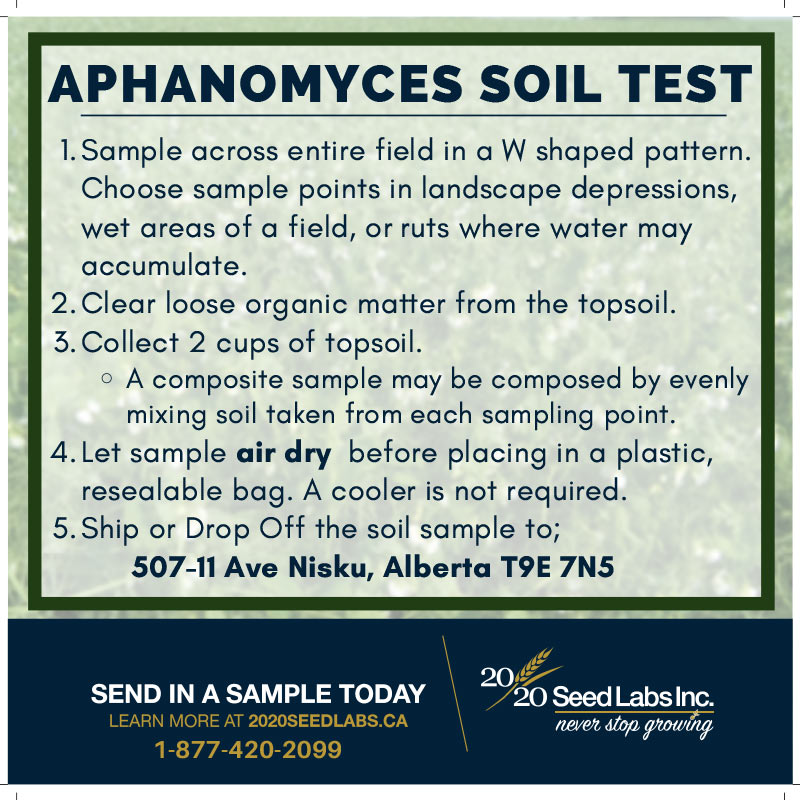
- Target high-risk areas (field entrances, low spots, historically affected zones).
- Use clean tools (soil probe, auger, or spade) free from contaminated soil.
- Collect 15–20 subsamples per field from the top 5–10 cm (root zone). Sample in a W-shaped pattern at entrances out to a maximum of 150 feet into the field, also target low spots, entrances, and stressed areas. Do not sample randomly.
- Mix thoroughly in a clean pail to form one composite sample (~1 litre). Submit a minimum of 2 cups of soil in a large plastic bag.
- Label clearly with your name, field ID, and requested test(s): Aphanomyces, Clubroot
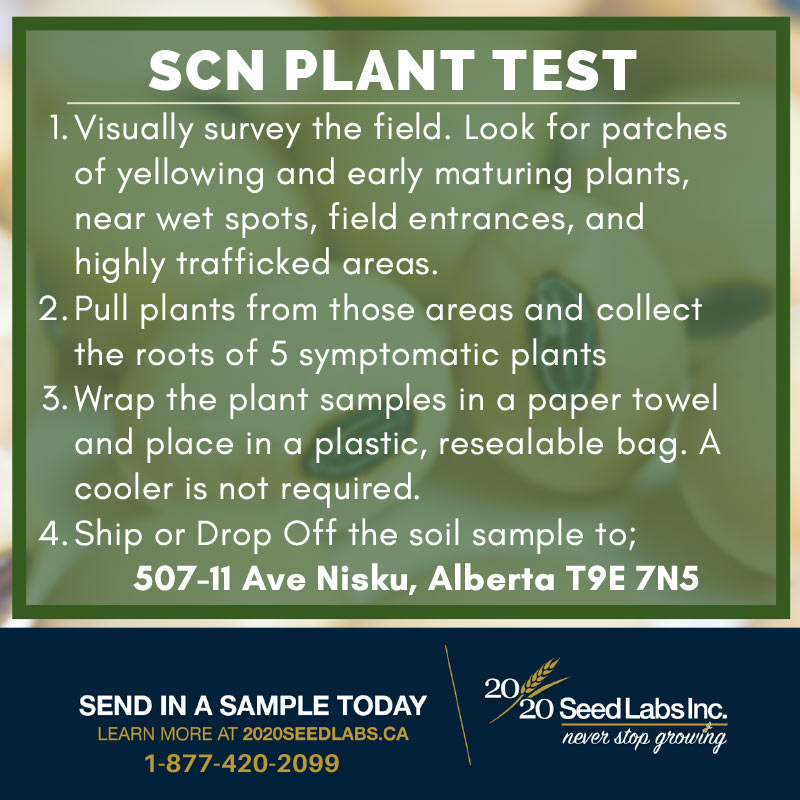
Soil samples can be shipped directly to 20/20 Seed Labs Inc. 507-11 Avenue, Nisku, Alberta, T9E 7N5
Taking a few extra steps at sampling helps ensure the data you receive is accurate and actionable. If you are planning to submit samples this spring and would like to review your clubroot, Aphanomyces or weed check soil sampling strategy, we are happy to help.
Learn more about Soil Testing at 20/20 Seed Labs and contact our lab directly if you have questions or need support 1-877-420-2099, support@2020seedlabs.ca.