A Prescription for a Grower’s Success
Aligning Seed, Soil and Disease Diagnostics with Early-Season Decisions
A whitepaper from the team at 20/20 Seed Labs Inc.
Every growing season begins long before the crop emerges.
Decisions around seed selection, seeding rates, treatment strategies, rotation planning and risk management are often made under tight timelines and even tighter margins. By the time a crop is visible above ground, many of the factors that determine its success are already in motion.
For agronomists and growers alike, the challenge is not a lack of data; it is knowing which information matters most, and how to interpret it in the context of real field conditions.
Seed quality, disease presence and soil health all influence stand establishment, plant resilience and final yield. Yet many of these risks remain invisible without diagnostic insight. When these factors are understood early, they become manageable, but when they are overlooked, they compound quickly.
The strongest early-season decisions begin with clarity, and clarity begins with diagnostics.
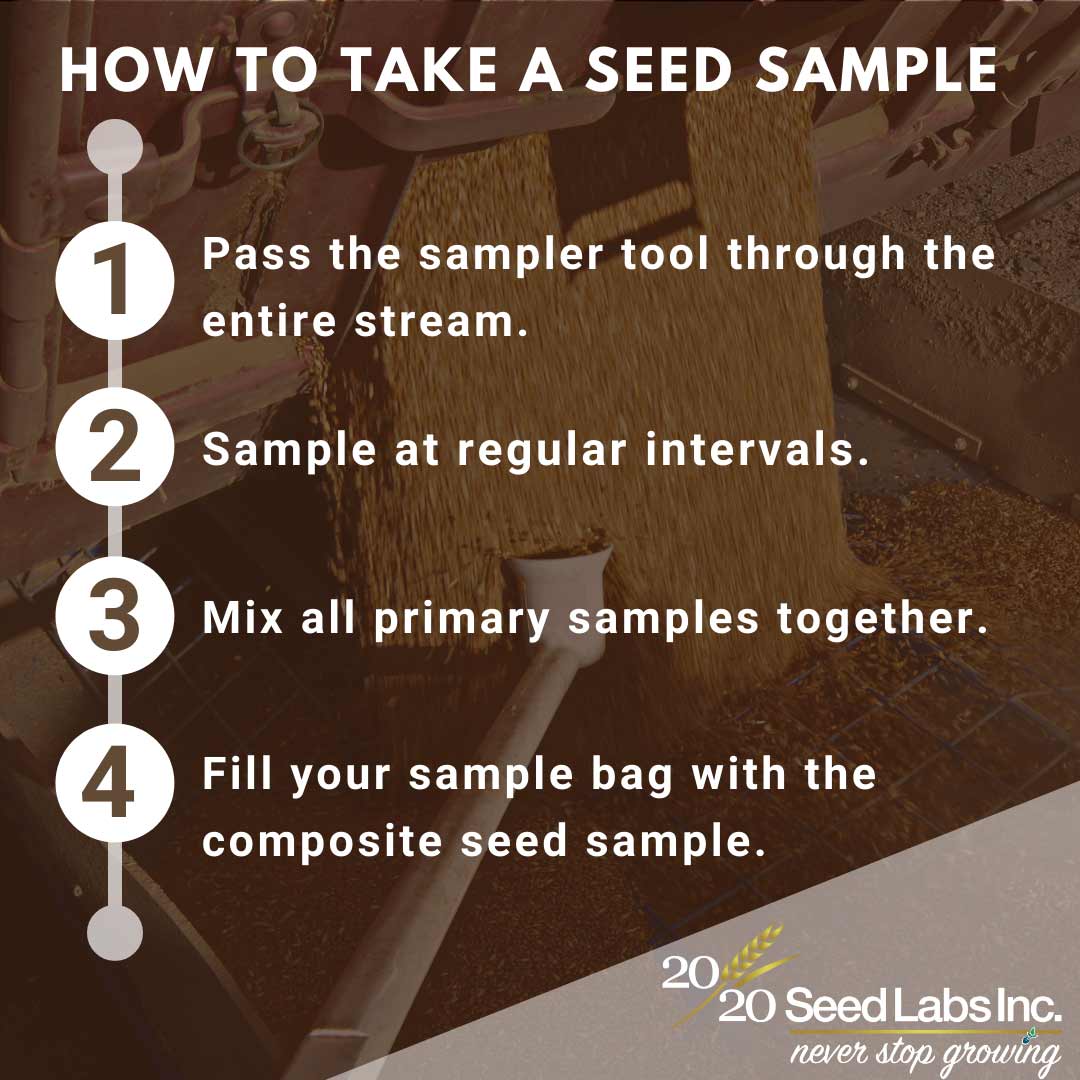
Yield risk often begins before the seed ever hits the soil, and seed testing transforms unknowns into usable information, allowing both growers and advisors to align expectations with reality before planting decisions are locked in. Confirming germination and vigour, identifying seed-borne disease, and understanding physical seed characteristics all contribute to stronger agronomic planning.
Testing supports:
- Accurate seeding rate calculations
- Treatment decisions and risk mitigation
- Storage and handling considerations
- Confidence in stand establishment potential
- Protection of yield and profitability
Each year, post-harvest testing reveals clear regional patterns in seed quality and disease pressure. These patterns influence planting success and management strategies across the Prairies and beyond. When diagnostics are used proactively, they shift decision-making from reactive to informed. Laboratory results are often interpreted as pass-fail indicators. In reality, they provide context, and context is what turns a result into a decision.
A germination result indicates how many seeds produced normal seedlings under ideal laboratory conditions. It does not predict how those seeds will perform in the field under stress. A result of 85% germination, for example, meets minimum standards for many crops.
However, that number alone does not reveal:
- Emergence speed and uniformity
- Seedling strength
- Response to cold or variable soils
- Effects of storage, age or disease
- Underlying reasons for reduced performance
The same germination value can represent very different levels of field risk depending on vigour, disease presence, planting conditions, and target population. Germination provides the baseline while vigour measures how well seed performs under sub-optimal conditions reflecting emergence speed, uniformity, and resilience to stress. Although two seed lots may share identical germination results, they may still perform very differently in the field due to differences in vigour. This becomes especially important when planting early, seeding into marginal conditions, or managing narrow establishment windows.
When paired with agronomic reality:
- Early seeding combined with low vigour elevates establishment risk
- High vigour supports confidence when pushing planting windows
- Moderate vigour alongside disease presence can compound early stress
Understanding vigour allows agronomists and growers to adjust seeding rates, treatment strategies and expectations before problems appear.
Thousand kernel weight (TKW) measures the physical weight of seed and directly affects seeding accuracy and final plant populations. Using a standard or “book” TKW assumes all seed lots are identical when in actual practice; seed size varies significantly between lots and seasons.
Ignoring this variability can lead to:
- Over-seeding and unnecessary seed cost
- Under-seeding and thin stands
- Inconsistent plant populations across fields
TKW bridges the gap between an agronomic plan and actual field outcomes. When combined with germination, vigour and target populations, it enables precise and consistent stand establishment. Mechanical damage occurs during harvest, conditioning, treatment, and transport, some damage will be visible, but much of it remains internal and undetected without testing.
Damage can compromise:
- Seed coat integrity
- Embryo protection
- Energy reserves
- Resistance to disease and stress
A seed lot may still meet germination standards yet perform poorly in the field if internal damage is present. Mechanical damage also compounds over time and does not reset between handling stages. When combined with early planting, storage duration or disease presence, mechanical damage can significantly reduce a seed lots margin for error.
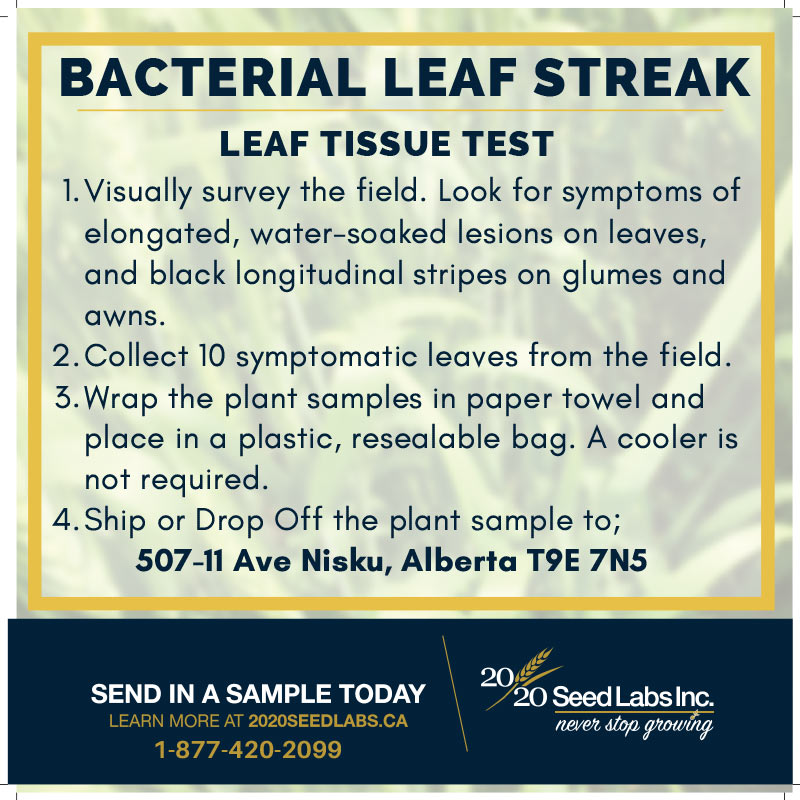
Because seed-borne pathogens rarely announce themselves, diagnostics make them visible before planting decisions are finalized. Disease testing shifts risk assessment from assumption to evidence allowing growers and agronomists to understand pathogen presence, evaluate management options, and protect both current and future crop performance.
Did you know that seed-borne pathogens collectively cost hundreds of millions to over a billion dollars annually in lost yield and value across major Canadian crops?
Pathogens do not respect pedigrees. Certified, common and farm-saved seeds can all carry risks. For example Fusarium graminearum is best known for causing Fusarium head blight, but its influence begins much earlier.
Even at low levels, seed-borne infection can affect:
- Emergence and stand uniformity
- Root and crown development
- Stress tolerance
- Susceptibility to secondary infections
- Mycotoxin risk later in the season
A seed lot may meet germination standards and still struggle if pathogen pressure interacts with stress conditions such as cool soils or early planting.
Risk increases when Fusarium presence intersects with:
- Early seeding into cool conditions
- High residue environments
- Susceptible varieties
- Absence of seed treatment
- Short rotations
It’s important to understand infection levels before planting allows for informed decisions around treatment, seed lot selection and management strategies. In pulse crops, diseases such as Ascochyta can influence both establishment and in-season development. Two seed lots may have similar germination and vigour yet perform differently if one carries higher pathogen levels.
Ascochyta presence can:
- Move from seed into emerging stands
- Increase susceptibility under wet conditions
- Require treatment or seed lot changes
- Influence monitoring and in-season management
When disease results are interpreted alongside environmental conditions and rotation history, they provide a clearer picture of field-level risk.
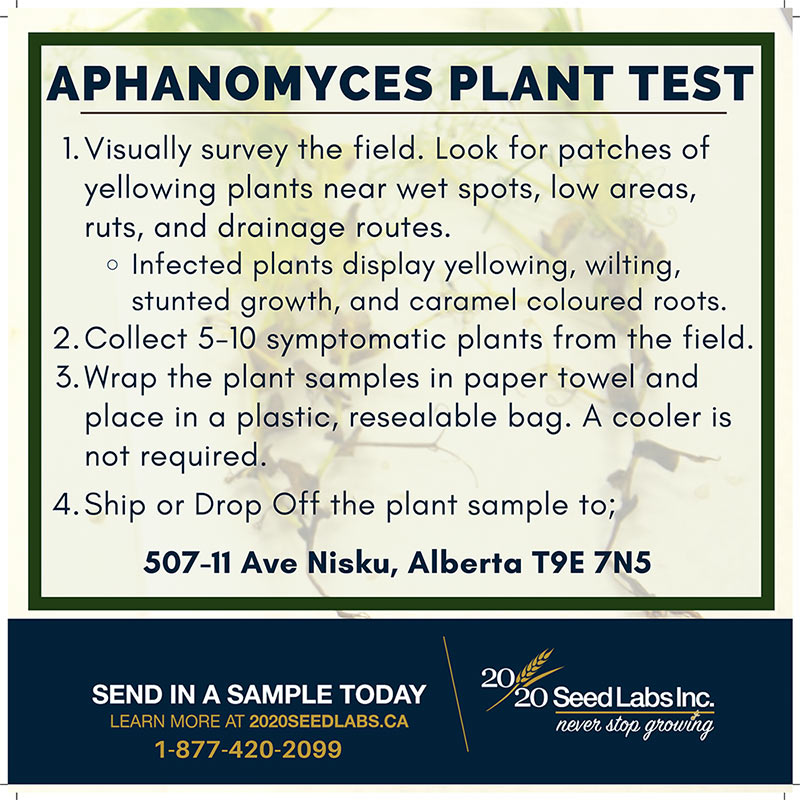
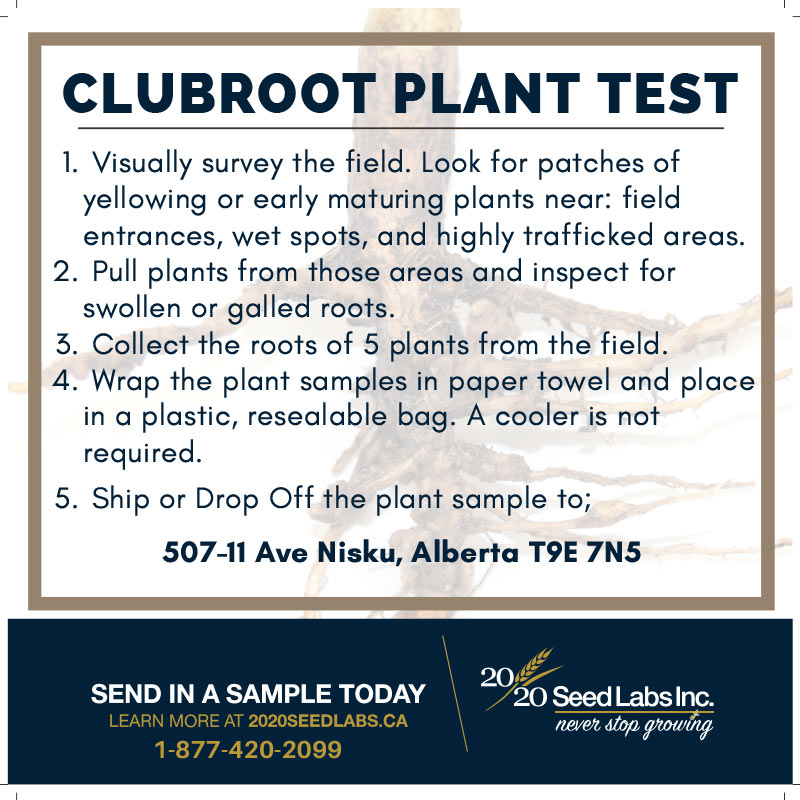
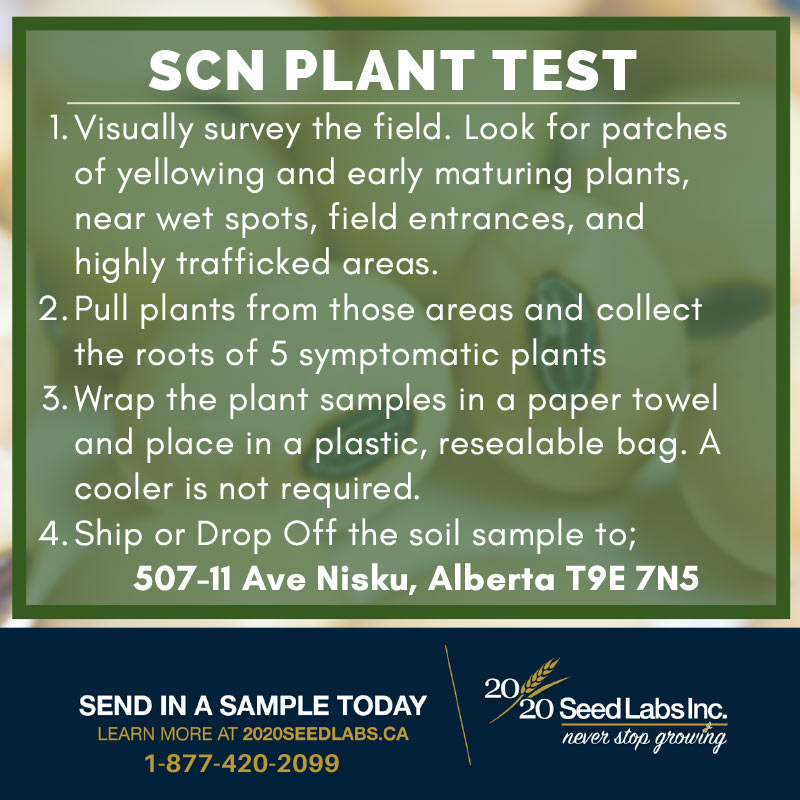
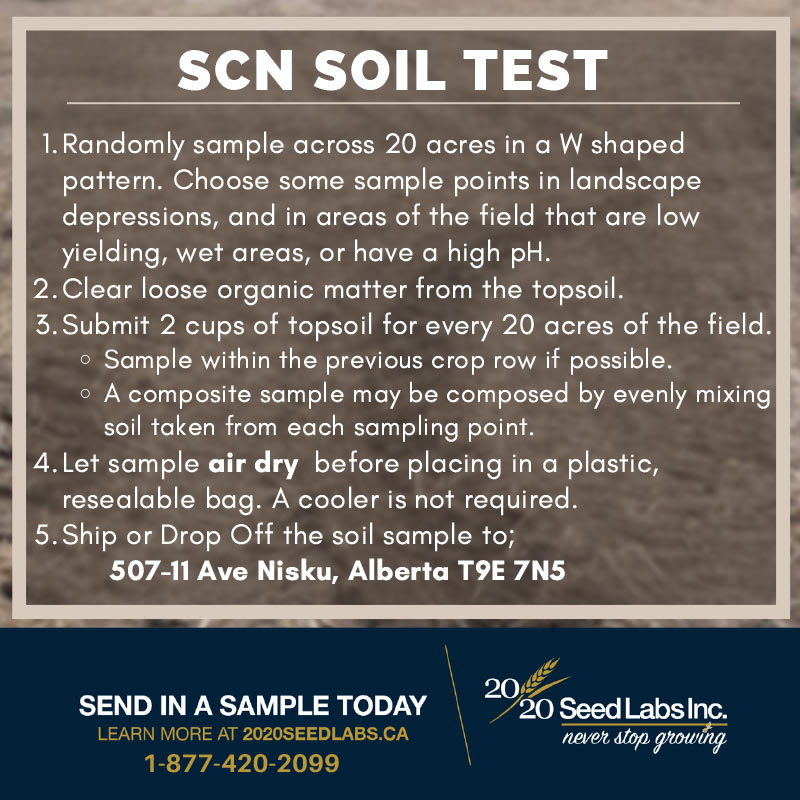
Soil-borne pathogens and plant health dynamics often remain hidden until yield potential has already been affected. Diagnostics can reveal pathogens that have been persisting in soil for years, root health risks affecting establishment, disease pressure linked to rotation and environment, and hidden stressors limiting yield potential.
Two fields with similar fertility and management can perform very differently if pathogen levels differ. Soil and plant health testing helps to distinguish whether performance challenges stem from nutrition, environment, or disease.
Early detection supports:
- Rotation planning
- Variety selection
- Sanitation and soil movement management
- Long-term land value protection
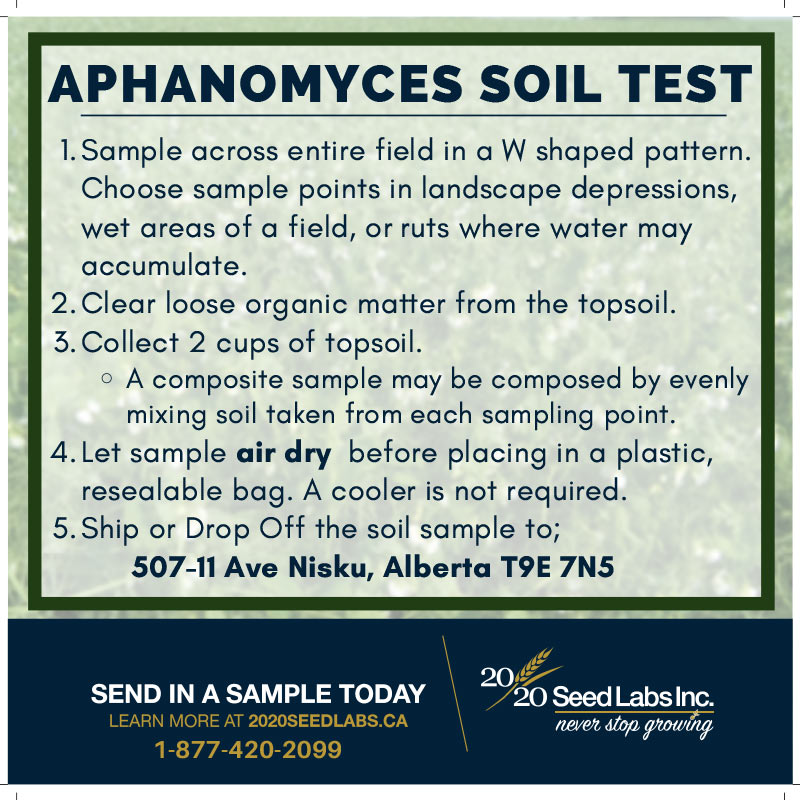
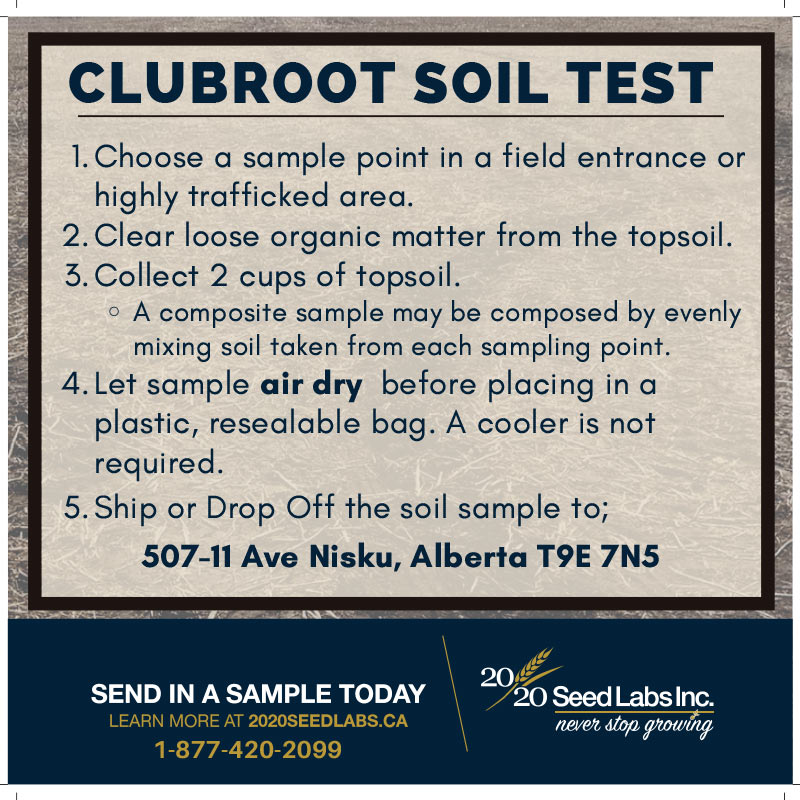
Pathogens such as Aphanomyces and clubroot can persist for years or decades. Identifying them early allows for proactive management rather than reactive response.
No single test tells the entire story. Real value emerges when diagnostics are interpreted together and aligned with field conditions. When germination, vigour, seed-borne disease and soil health data are considered as a system, they provide a comprehensive view of establishment risk and yield potential.
An integrated approach will allow you to:
- Align seeding rates with realistic emergence expectations
- Select appropriate treatment strategies
- Adjust rotation or crop plans where needed
- Anticipate early-season stress before it appears
- Make confident, evidence-based recommendations
Diagnostics become most powerful when paired with interpretation, but data alone does not drive decisions; understanding what you’re working with does. Before seed enters the soil, asking the right questions can help clarify risk and guide action.
- Is germination supported by strong vigour?
- Are seeding rates aligned with seed size and target populations?
- Are seed-borne pathogens present that could influence establishment?
- Do soil conditions or pathogen levels alter crop or rotation plans?
- Should seed be treated, retested or replaced?
Answering these questions early allows for adjustments that protect stand establishment and yield potential and ultimately your bottom line. A healthy stand rarely begins at emergence; it begins with informed decisions made well before planting. As margins tighten and environmental variability increases, the ability to anticipate risk and adapt early becomes one of the most valuable advantages available to both agronomists and growers.
Diagnostics provide clarity in a system filled with variables, transforming uncertainty into informed action, and helping align expectations with reality. When seed quality, disease presence, and soil health are understood together, early-season decisions become more confident and outcomes more consistent. The most successful seasons are rarely left to chance. They are built on insight, interpretation, and the willingness to look beneath the surface before the crop ever emerges.
Learn more about seed, soil and plant testing at 20/20 Seed Labs Inc. https://2020seedlabs.ca/services/