An article by Trevor Blois, Disease Diagnostics Supervisor 20/20 Seed Labs Inc.
Getting seed ready for the drill doesn’t start at the drill. It starts in the lab.
Every season, we see the same scenario play out: two seed lots that look identical on the surface perform very differently once they hit the field. The difference often comes down to what was — or wasn’t — understood before planting, and whether a seed treatment decision was made with the right information.
Step One: Know Your Seed Before You Treat It
Before you even consider a seed treatment, you need to understand the baseline quality of your seed lot.
A germination test tells you if the seed is capable of emerging. A vigour test gives you insight into how it will perform under stress. But where things often get overlooked is disease.
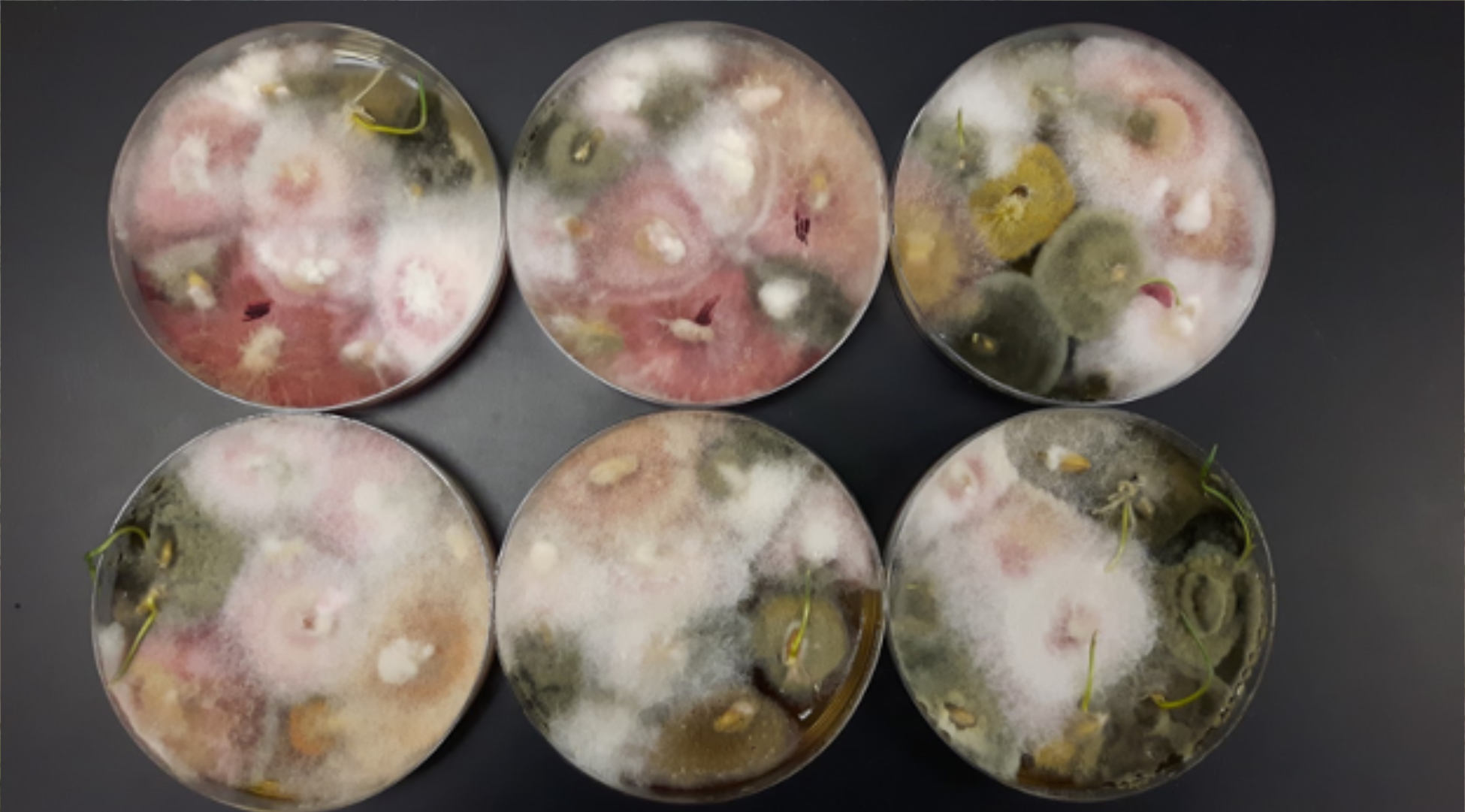
A Fungal Screen can reveal the presence of pathogens like Fusarium or Cochliobolus – issues that may not be visible but can significantly impact emergence and stand establishment.
Without this information, applying a seed treatment becomes a guess.
With it, you’re making a decision.
Seed treatments play an important role in protecting yield potential, particularly in cereals and pulses where early-season disease pressure can be unpredictable.
They act as a protective barrier, helping defend against:
- Seed-borne diseases carried into the field
- Soil-borne pathogens encountered at emergence
- Early-season stress that can reduce stand uniformity
But a treatment is only as effective as its fit for the seed lot and its application quality.
Not every seed lot requires the same level of protection. Some may benefit significantly from treatment, while others — particularly those with low disease pressure and strong vigour — may see limited return.
Untreated seed isn’t inherently a poor choice. In some cases, it can be a strategic one.
Growers may opt for untreated seed to:
- Reduce input costs
- Maintain flexibility in management
- Meet market or production requirements (e.g., organic systems)
However, untreated seed carries greater exposure to early-season risk — especially if underlying seed quality hasn’t been validated.
The key difference isn’t treated vs. untreated.
It’s known vs. unknown.
If a seed treatment is part of your plan, application quality is critical.
We often see treated seed come through the lab where:
- Coverage is inconsistent
- Active ingredient distribution is uneven
- Dust-off or poor adhesion reduces effectiveness
In these cases, the treatment may not deliver the protection it was designed to provide.
Good coverage ensures that every seed has the protection you’re paying for.
The conversation around treated vs. untreated seed shouldn’t start with the product.
It should start with the data.
When you test your seed, you can:
- Identify disease presence and severity
- Understand germination and vigour potential
- Make informed decisions on whether treatment is necessary
- Select the right treatment package if it is
Without that data, you’re relying on assumptions — and assumptions are where risk creeps in.
Start Clean. Decide Smart. Seed with Confidence.
At 20/20 Seed Labs, we see seed as more than an input — it’s the foundation of your crop.
Whether you choose treated or untreated seed, the goal is the same:
establish a strong, uniform stand and protect your yield potential from day one.
And that starts with knowing exactly what’s in your seed lot before it ever reaches the field.
A quick Fungal Screen test can confirm presence of ten of the most common seed borne pathogens for cereal crops. Pulses on your mind? Through a Complete Disease Diagnostic test you can confirm presence of ten of the most common seed-borne pathogens to pulse crops.
Contact support@2020seedlabs.ca for more information or call 1-877-420-2099